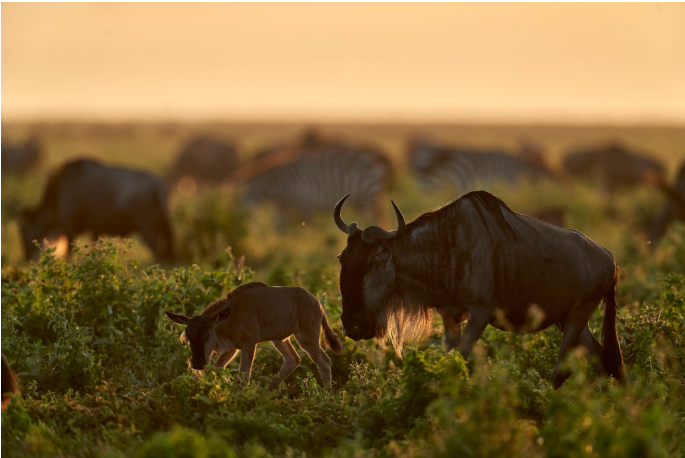
There’s nothing else on Earth quite like it. Nearly two million wildebeest, zebras, and gazelles move in a relentless, circular procession across the plains of Tanzania and Kenya, driven by nothing more than the smell of rain and the promise of fresh grass. This is the Serengeti Great Migration — widely considered the greatest wildlife spectacle on the planet, and the single biggest reason travelers put a Tanzania safari on their bucket list.
But the Great Migration isn’t a single event you can circle on a calendar. It’s a year-round, continuous journey, and understanding where the herds are at any given time is the key to planning a trip that delivers exactly the experience you’re hoping for. This guide walks through what the migration actually is, where the herds are month by month, and how to plan your visit around it.
What Is the Great Migration?
The Great Migration is the annual, clockwise movement of over 1.5–2 million wildebeest, alongside hundreds of thousands of zebras and gazelles, through the Serengeti-Mara ecosystem that spans northern Tanzania and southern Kenya. The herds aren’t migrating toward a destination so much as chasing rainfall and the fresh grazing it brings, which means the exact timing and location of any given stage shifts slightly from year to year depending on weather patterns.
Along the way, the herds face two of nature’s most dramatic obstacles: the Grumeti River in the western Serengeti, and the larger, more infamous Mara River near the Tanzania-Kenya border. Both are home to enormous Nile crocodiles lying in wait, and the crossings themselves — chaotic, high-stakes, and often lethal for stragglers — have become the visual centerpiece of the entire migration story.
The Great Migration Month by Month
Because the migration is continuous, “the best time to see it” really depends on what you want to witness. Here’s the general pattern that holds true across most years, including 2026:
December to March: Calving Season on the Southern Plains
The herds gather on the short-grass plains of the southern Serengeti, particularly around the Ndutu area, for calving season. In an astonishing two-to-three-week window, roughly 500,000 wildebeest calves are born, with as many as 8,000 births recorded in a single day at the February peak. This concentration of vulnerable newborns draws intense predator activity, making it one of the richest periods for big-cat sightings anywhere in Africa. It’s also far less crowded than the famous river crossing months, making it a favorite among repeat safari-goers and photographers.
April to June: The Move North and the Grumeti Crossings
As the short rains taper off, the herds begin pushing north and west through the central and western Serengeti. This period includes mating season, and by June the vanguard herds typically reach the Grumeti River in the Western Corridor, where the first river crossings of the year take place. These Grumeti crossings are smaller in scale than the famous Mara crossings later in the year, but they come with a major advantage: far fewer vehicles and a more intimate viewing experience.
July to October: The Mara River and the Northern Serengeti
This is the period most people picture when they think of the Great Migration. From July onward, the herds push into the northern Serengeti and begin crossing into Kenya’s Masai Mara via the Mara River, with the main crossing points clustered around Kogatende and the Lamai Wedge. The pressure of enormous herds massing on the riverbanks between August and September often produces the “mega-crossings” that dominate wildlife documentaries. September also brings the dramatic “back-crossing,” as herds move both north and south across the Mara within the same week, chasing localized rainfall in both directions. Crossings can happen several times in a single day, or not at all for several days straight, so allowing at least three nights in the northern Serengeti significantly improves your odds of witnessing one.
November: The Journey South Begins
As the short rains return to Tanzania, the herds begin their long journey back south, moving through the Serengeti toward the Ndutu area to prepare for the next calving season. This shoulder-season month offers a compelling mix of decent wildlife action, thinning crowds, and softer lodge rates.
Peak Season vs. Shoulder Season
Peak season (June to September) delivers the highest odds of witnessing a dramatic Mara River crossing, but it also brings the largest crowds and the highest prices. Popular crossing points can get congested with safari vehicles, and top camps in the northern Serengeti often book out six to twelve months in advance.
Shoulder season (November, and parts of April to June) offers a strong balance: meaningful migration activity, noticeably thinner crowds, and lower rates. September specifically stands out as a favorite among serious wildlife enthusiasts, since vehicle density around crossing points tends to drop while crossing activity remains high.
Calving season (January to February) is, for many repeat visitors, the most rewarding time of all — not because of the herd movement itself, but because of the extraordinary predator-prey drama it produces, all without the crowds of peak crossing season.
Where to Base Yourself
Where you stay should follow the herds, not the other way around:
- December–March: Base yourself in the Ndutu area or southern Serengeti for calving season.
- April–June: The Western Corridor, near the Grumeti River, puts you in position for the season’s first crossings.
- July–October: Camps around Kogatende and the northern Serengeti offer the best access to Mara River crossing points.
- November: Central and southern Serengeti camps position you well for the herds’ return journey.
Many operators also offer mobile camps that relocate throughout the year to stay close to the herds — a great option for travelers who want migration exposure across an extended trip rather than committing to one fixed location.
Tips for Making the Most of Your Migration Safari
- Give yourself time. A single-day visit to a crossing point is rarely enough. Plan for at least three nights in the northern Serengeti during crossing season, since crossings are unpredictable and can’t be scheduled.
- Book early for peak season. Camps near prime crossing points can fill six to twelve months ahead of July through October travel dates.
- Go with an experienced guide. The Serengeti is vast, and knowing where the herds are massing on any given day depends heavily on local expertise and up-to-date tracking of herd movement.
- Consider a hot air balloon safari. A sunrise balloon flight over the plains offers a completely different, birds-eye perspective on the sheer scale of the herds.
- Don’t overlook the “quieter” months. Calving season and the shoulder months of April–June and November deliver phenomenal wildlife experiences with a fraction of the vehicle traffic.
- Pack for variable weather. Long days outdoors call for sun protection, layers, and a good pair of binoculars or a telephoto lens for photography, since river crossings can happen at a distance.
Conclusion
The Serengeti Great Migration isn’t a single moment to catch — it’s a living, year-round journey that rewards travelers no matter when they visit, as long as they know what to expect. If a dramatic Mara River crossing is your priority, plan for July through October and be prepared for crowds and premium pricing. If you’d rather witness nature’s rawest drama with a fraction of the vehicles, calving season in the southern plains from January to February, or the shoulder months around the Grumeti crossings, may leave an even deeper impression. Whichever window you choose, the key to a truly memorable migration safari lies in matching your travel dates to the stage of the journey you most want to witness, and trusting an experienced local guide to put you in the right place at the right time.
Key Takeaways
- The Great Migration is a year-round, continuous movement of nearly two million wildebeest, zebras, and gazelles through the Serengeti-Mara ecosystem.
- Calving season runs from December to March, peaking in February with up to 8,000 wildebeest births a day on the southern plains.
- Grumeti River crossings in the Western Corridor typically begin around April to June, offering dramatic action with fewer crowds.
- Mara River crossings, the most iconic stage of the migration, generally run from July to October, peaking in August and September.
- Peak season (June–September) offers the highest odds of a crossing but comes with the biggest crowds and highest prices; shoulder seasons offer a strong balance of action and value.
- Because crossings are unpredictable, plan for at least three nights near crossing points to maximize your chances.
- Exact timing shifts each year based on rainfall, so treat monthly guides as general patterns rather than fixed dates.
Frequently Asked Questions
When is the best time to see the Great Migration? It depends on what you want to see. July to October offers the best chance of witnessing a dramatic Mara River crossing, while January and February are best for calving season, and April through June offers Grumeti River crossings with fewer crowds.
Is the Great Migration the same every year? The general pattern repeats annually, but exact dates and locations shift from year to year based on rainfall, since the herds follow available grazing rather than a fixed schedule.
How many days do I need to see a river crossing? Because crossings can’t be scheduled or predicted precisely, most experienced guides recommend staying at least three nights near a crossing point to significantly improve your chances of witnessing one.
Where do wildebeest cross rivers during the migration? The two main crossing points are the Grumeti River in the western Serengeti, typically active from around April to June, and the Mara River in the northern Serengeti near the Kenya border, typically active from July to October.
Is calving season worth visiting instead of the river crossings? Many experienced safari travelers consider calving season, from January to February, just as rewarding as the river crossings, thanks to the extraordinary predator activity and significantly smaller crowds.
Do I need to visit Kenya to see the Great Migration, or is Tanzania enough? Tanzania’s Serengeti hosts the migration for most of the year, including calving season and the Grumeti crossings. The herds only move into Kenya’s Masai Mara during the northern crossing phase, roughly July through October, so a Tanzania-only safari can still offer excellent migration viewing outside that window.
How crowded are the popular crossing points? Peak season crossing points, especially in August, can become congested with safari vehicles. Shoulder months like September and November, along with calving season, generally offer a noticeably quieter experience.
